Police Car Chace: How a City Road Creates Direction
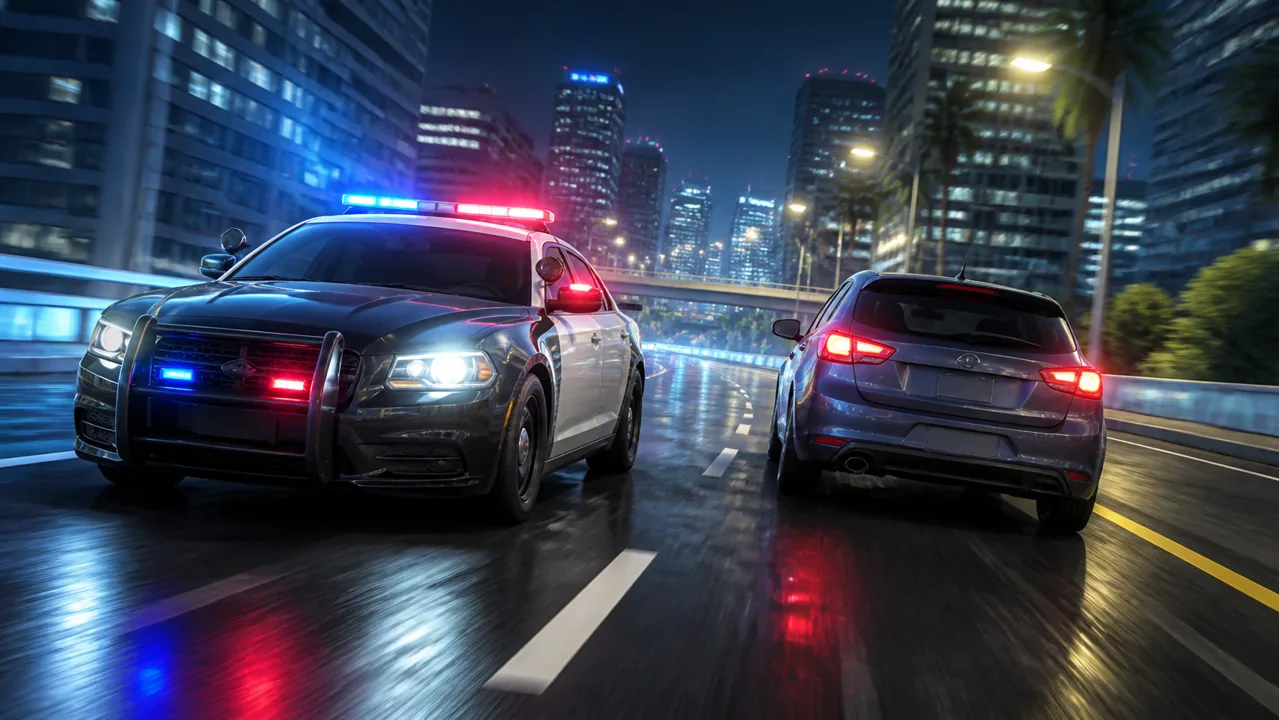
Police Car Chace places a pursuit theme inside a straightforward driving control scheme. The published instructions assign movement and steering to WASD or the Arrow keys. This editorial article considers how roads, lighting, and landmarks can communicate direction without inventing missions or systems that have not been confirmed.
Road Geometry Organizes the Scene
Lane lines, intersections, barriers, and curves create a visual grammar. Their alignment shows where the route continues, while changes in width can signal a different kind of space ahead. At night, reflected light can strengthen those boundaries if it remains controlled.
The hero image is newly created editorial artwork using generic, unbranded vehicles. It is not a screenshot from the game.
Choosing One Control Set
WASD and the Arrow keys provide equivalent directional groups. Selecting one group and using it consistently makes steering response easier to learn. Small corrections reveal how quickly the vehicle changes direction before longer inputs are attempted.
Visual References for Controlled Driving
- The center and outer edges of the lane.
- Fixed buildings that reveal forward movement.
- The position of the pursued vehicle.
- Curves visible beyond the immediate road section.
Building Urgency Without Confusion
A pursuit theme naturally implies speed, but clarity remains essential. Strong vehicle silhouettes, a stable camera direction, and restrained motion blur can create energy while keeping the route legible. Siren colors should accent the subject rather than cover important road detail.
Where to Find the Game
Police Car Chace opens from its Gamess page. It belongs to the Adventure Games category, which gathers varied journeys and environments. The Gamess homepage lists more recent browser games.
Summary
The title’s clearest design idea is pursuit through readable space. Familiar directional controls provide the input, while city geometry supplies the information needed to understand motion and route changes.