Blockibo: Color Blocks — Notes on Space and Exit Gates
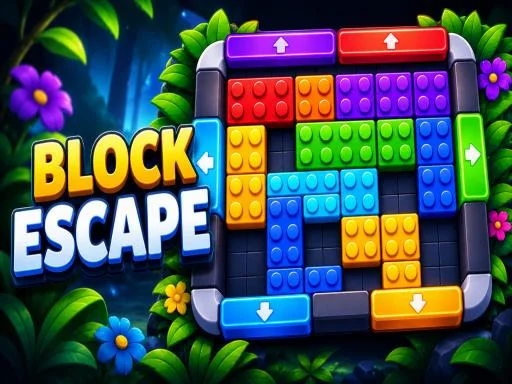
Blockibo: Color Blocks presents a small board with colorful movable blocks and exits that correspond to them. Its source description speaks of sliding, tighter spaces, obstructed routes, and arrangements that require planning. The interesting subject here is not color alone. It is the relationship between a block, the space around it, and the gate it must eventually reach. A compact board can make each move more consequential because one position affects the next available path.
Scene Notes
The Gate Gives Color a Purpose
A colored exit acts as a destination, not just a decorative accent. Matching a block to its exit supplies a clear visual relationship even before the route is open. The board can therefore be read in two passes: first identify the relevant pair, then examine the intervening space. A pair may be obvious while its path is not.
Empty Space Is Part of the Puzzle
Attention naturally goes to the bright blocks. Yet the unused squares or lanes are the places that allow a block to move. An open region can serve as temporary breathing room; a narrow gap can limit options. The source does not give a formal rule for every board, so these are observations about the described sliding-puzzle format rather than instructions for a particular level.
One Move Can Change Several Routes
When blocks share a compact layout, moving one can open a path for another or occupy the space that the second block needs. This explains why studying the entire arrangement can be more useful than focusing only on the block nearest an exit. The game description explicitly notes blocked routes and more demanding layouts, supporting a reading based on sequence and spatial consequences.
Reflection
Blockibo's toy-like colors make the board approachable, while the route structure adds friction. The visual design does not need to hide the goal. The challenge can arise from seeing the goal clearly and still needing to prepare a path. That distinction is an appealing quality of sliding-block puzzles: recognition comes quickly; organization takes longer.
Details Worth Noticing
- Which block is paired with which exit?
- Where is there enough open space for a slide?
- Which occupied lane affects more than one block?
- Does the next move open a route or merely move congestion?
- What changed on the board after the last action?
Final Reading Path
See the puzzle directly on the Blockibo: Color Blocks game page, find more Puzzle Games, or return to the Gamess homepage. The notebook's main point is that color identifies destinations, but space determines whether those destinations are reachable.
There is a quiet rhythm in that process. First the board presents a colorful collection of objects. Then the viewer recognizes destinations. Only after that does the more demanding work begin: examining how one move alters the spaces available to every other block. A good puzzle layout can be small without feeling trivial because its limited room makes relationships visible. The same colors that make the opening approachable remain useful when the configuration becomes tight. They allow the player to keep the purpose of each block in mind while reconsidering the route. The result is a scene built from simple materials but governed by their arrangement.