Best Buds: Scene Notes From a Shared Fashion Studio
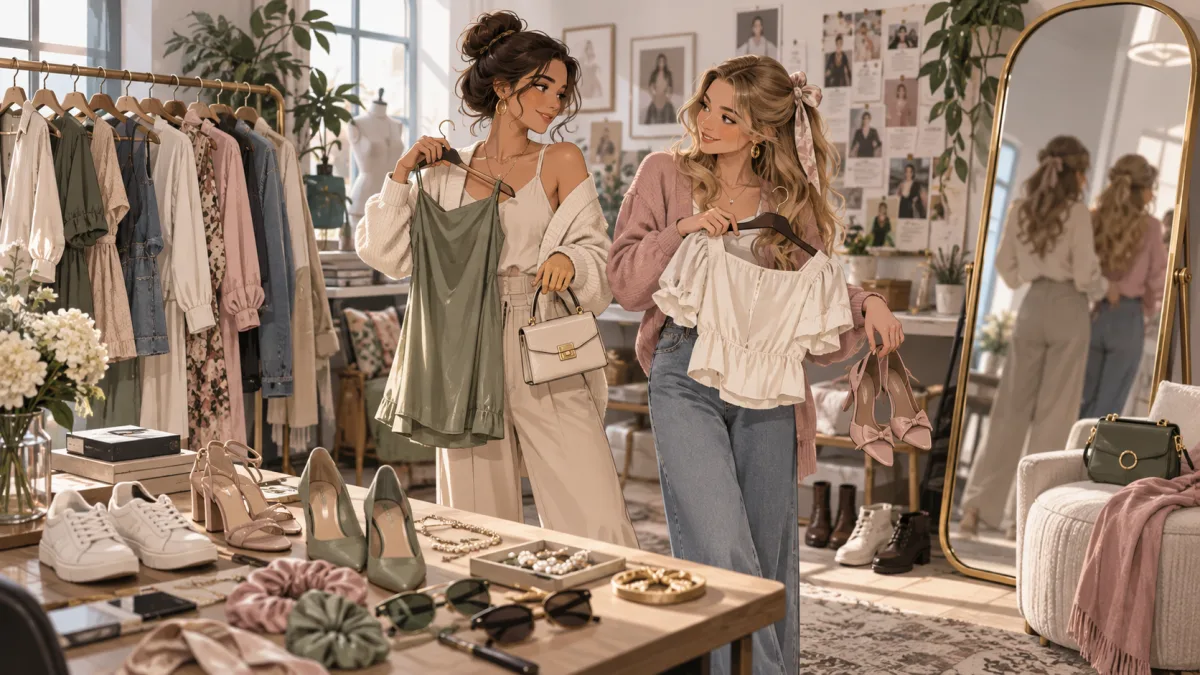
Best Buds is viewed as a calm fashion-studio moment shared by two friends. The original editorial image shows clothing racks, shoes, jewelry, handbags, a large mirror, and two coordinated but different outfits. These elements reflect the supplied dress-up description without reproducing a game interface or claiming the exact contents of every occasion and wardrobe option.
Scene Notes
Two Looks, One Conversation
The figures face each other rather than the viewer. One holds a muted green dress and a small structured bag; the other compares a pale ruffled top with pink shoes. Their posture makes selection feel collaborative. Similar warm neutrals connect them, while different silhouettes preserve each person’s identity.
The Mirror Adds a Second View
A tall mirror repeats the scene from behind and introduces depth without adding another character. It also turns the studio into a place for comparison. The reflected clothing stays soft enough that the main pair remains the clearest focal point.
Accessories Form a Quiet Foreground
Shoes, sunglasses, jewelry, and fabric items create a low horizontal layer across the bottom. Their spacing feels deliberate rather than crowded. No label or brand is visible, so material, color, and shape carry the editorial meaning.
Reflection
The composition works through coordination instead of perfect matching. Cream, rose, olive, denim, and natural wood recur in different amounts, creating harmony without making the outfits identical. That balance suits a title centered on two close friends expressing themselves through fashion.
Daylight from the left gives skin, fabric, and metal distinct textures. Soft shadows keep the room gentle, while plants and pinned reference images suggest a working studio. The background remains observational and does not imply an undocumented story or professional setting inside the game.
Details Recorded
- Both figures receive equal visual importance.
- The mirror expands the space without obscuring the clothing.
- Accessories stay readable through careful foreground spacing.
- The characters are original and do not resemble celebrities.
- No copied interface, logo, or readable promotional text appears.
Final Reading Path
See Best Buds, continue through Multiplayer Games, or return to the Gamess homepage. The scene remains most persuasive as a notebook entry about friendship, comparison, and personal style rather than a catalogue of unsupported features.
Materials Carry Subtle Differences
Knitwear absorbs light, satin reflects it, denim introduces a firmer texture, and metal jewelry creates small highlights. These contrasts help the outfit pieces remain separate even when their colors are related. The studio therefore feels coordinated without becoming visually flat.
A Shared Choice, Not a Competition
The pair stand close enough to compare items comfortably, and neither occupies a dominant position. Clothing is distributed between them and across the room. This symmetry supports the friendship theme while avoiding assumptions about winners, ratings, or multiplayer interaction that the supplied information does not establish.
Atmosphere Beyond the Wardrobe
Plants, daylight, pinned images, and pale furnishings soften the practical arrangement of racks and accessories. They make the setting feel inhabited without introducing a specific narrative. The scene remains a visual observation of style choices: colors repeat, shapes answer one another, and the mirror quietly records the relationship between the two finished directions.
Balance in the Final Frame
The clothing rack carries many vertical shapes, while the table of accessories forms a broad horizontal counterweight. Between them, the two friends create a gentle diagonal through their hands and selected garments. This balance keeps attention moving without making the room feel staged or symmetrical. It also leaves enough quiet space around faces and clothing for the shared decision to remain the center of the notebook scene.